Animals

Mystery of the Disappearing Bees: Solved!
Apr 24th
By Richard Schiffman - blogs.reuters.com
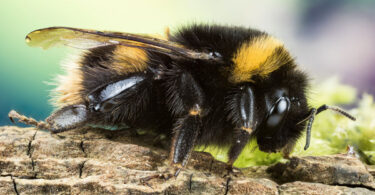
If it were a novel, people would criticize the plot for being too far-fetched – thriving colonies disappear overnight without leaving a trace, the bodies of the victims are never found. Only in this case, it’s not fiction: It’s what’s happening to fully a third of commercial beehives, over a million colonies every year. Seemingly healthy communities fly off never to return. The queen bee and mother of the hive is abandoned to starve and die.
Thousands of scientific sleuths have been on this case for the last 15 years trying to determine why our honey bees are disappearing in such alarming numbers. “This is the biggest general threat to our food supply,” according to Kevin Hackett, the national program leader for the U.S. Department of Agriculture’s bee and pollination program.
Until recently, the evidence was inconclusive on the cause of the mysterious “colony collapse disorder” (CCD) that threatens the future of beekeeping worldwide. But three new studies point an accusing finger at a culprit that many have suspected all along, a class of pesticides known as neonicotinoids.
Continue Reading – Mystery of the Disappearing Bees: Solved!

5 Foods You Should Never Feed Your Dog (and a Few You Can)
Apr 9th
By Dr. Marty Becker - vetstreet.com
Is “people food” safe for dogs? Some is, some isn’t, and knowing what’s OK to share can mean the difference between a healthy treat and a trip to the emergency clinic.
Poison to Pets
Sugar-free candy and gum
Read the label of your favorite sugar-free gum, candy or even cough drop, and you’ll likely find Xylitol on the ingredients list. The sweetener has become extremely popular in recent years, and its increased use has led to many cases of poisoning in dogs. The product causes low blood sugar and liver failure in canines. If you carry sugar-free gum or candy in your purse or backpack, make sure you keep it out of reach of your pet.
Continue Reading – 5 Foods You Should Never Feed Your Dog (and a Few You Can)

The A to Z of Pet Poisons – What You Absolutely Must Know
Mar 28th
28th March 2012
By Dr. Mary Fuller - vetstreet.com
No one intends for it to happen: A purse is left on the floor, and within minutes, your Boston Terrier is parading around with an empty prescription bottle or a chocolate wrapper in his mouth.
“We just don’t realize how determined our pets are to eat the things they shouldn’t,” says Dr. Tina Wismer, DVM, medical director for the ASPCA Animal Poison Control Center.
Of the 165,900 calls that the organization handled in 2011, most of them involved pets who’d ingested human prescriptions. “Many children with ADHD don’t want to take their medications, so they leave pills on their plates, where pets can get at them,” Dr. Wismer says. “Even nonprescription medications, such as ibuprofen, can be a problem because many brands have a sweet coating, so it’s like candy for dogs.”
Continue Reading – The A to Z of Pet Poisons – What You Absolutely Must Know

Environmentally Friendly Aquariums
Mar 24th
By Harriet Cooper - alive.com
A splash in the right direction
Keeping pet fish has come a long way from putting two goldfish in a glass bowl. Today, fish are more exotic, aquariums are larger, and they come with a sophisticated array of equipment. With aquariums found in about 12 percent of Canadian households, this hobby has become big business.
Unfortunately, some of the side effects of this growing hobby are not kind to the environment. You can change that. By learning about best and worst industry practices, you can make informed, eco-friendly decisions.

Large Cat Saves His Owner’s Life Hours After Being Adopted
Mar 1st
By Samantha Hernandez
A Sturgeon Bay (Wisconsin USA) woman has a lot to be thankful for after her newly adopted cat woke her from a diabetic reactive seizure just hours after bringing him home.
Amy Jung and her son, Ethan Jung, originally went to the Door County Humane Society on Feb. 8 to play with the cats, not bring one home. That all changed when Jung, 36, saw Pudding lying on a counter. She made a quick decision to adopt Pudding and his pal Wimsy.
When the Jungs arrived home, the 21-pound, orange-and-white cat made himself right at home, acting as if he had always been there.
“He just really took right over. Really second nature,” she said.
At around 9:30 p.m., she went to bed and about 1½ hours later the prodigious kitty came to her rescue.
Jung, who was diagnosed with diabetes at the age of 4, had begun to have a seizure. According to Jung, Pudding planted his weight on her chest and, when he could not wake her, began swatting her face and biting her nose.
Continue Reading – Large Cat Saves His Owner’s Life Hours After Being Adopted

Are Pets Psychic? A Cambridge Scientist Believes So
Feb 20th
One of my former neighbours in my home town of Newark-on-Trent, Nottinghamshire, was a widow whose son was a sailor in the merchant navy.
He did not like to tell his mother when he would be coming home on leave because he was afraid she would worry if he was delayed on the way. But his mother always knew anyway — thanks to the family cat.
This pet was very attached to this young man and, an hour or two before he arrived, it sat on the front door mat and began miaowing loudly as if equipped with some sixth sense which told it that he was on the way.
The cat was never wrong and this early-warning system gave our neighbour time to get her son’s room ready and prepare him a meal in the certainty that he would turn up soon afterwards.
Continue Reading – Are Pets Psychic? A Cambridge Scientist Believes So

How The Bees Can Help with Cell Phone-Induced Bodily Harm
Feb 4th
4th February 2012
By Sayer Ji
Cell phones and the communications infrastructure that makes them possible, are ubiquitous today, making complete avoidance of their radiation next to impossible. Plenty of evidence already exists showing that cell phones emit a type of electromagnetic radiation — in the microwave range — capable of adversely affecting a wide range of organs, with the nervous system of those exposed perhaps most sensitive to its adverse effects. Below is a sampling of some of their adverse health effects as demonstrated in the biomedical literature.
Continue Reading – How The Bees Can Help with Cell Phone-Induced Bodily Harm

Scientists Link Mass Death of Honey Bees to Farm Insecticide
Jan 20th
20th January 2012
Research by Purdue University
Honeybee populations have been in serious decline for years, and Purdue University scientists may have identified one of the factors that cause bee deaths around agricultural fields.
Analyses of bees found dead in and around hives from several apiaries over two years in Indiana showed the presence of neonicotinoid insecticides, which are commonly used to coat corn and soybean seeds before planting. The research showed that those insecticides were present at high concentrations in waste talc that is exhausted from farm machinery during planting.
The insecticides clothianidin and thiamethoxam were also consistently found at low levels in soil – up to two years after treated seed was planted – on nearby dandelion flowers and in corn pollen gathered by the bees, according to the findings released in the journal PLoS One this month.
Continue Reading – Scientists Link Mass Death of Honey Bees to Farm Insecticide

Funding Cut Over Chimpanzees Used as Lab Subjects for Invasive Medical Research
Dec 22nd
By Anthony Gucciardi
Contributing Writer for Wake Up World
Animal testing is a controversial subject not only in the United States, but around the globe. Chimpanzees, among other animals, are used to test big pharma’s latest ‘miracle’ drug as well as experimental skincare products and vaccinations. Recently, the National Institutes of Health and the National Academies’ Institute of Medicine took a stand against biomedical research on chimpanzees.
In a landmark report, the National Academies’ Institute of Medicine determined chimpanzee testing to be “largely unnecessary” – a statement that challenges the testing process that costs taxpayers $30 million a year to maintain. Continue Reading – Funding Cut Over Chimpanzees Used as Lab Subjects for Invasive Medical Research

Boy with Rare Disease Finds Support From One of Man’s Best Friends
Dec 14th
The amazing story of Lucas Hembree and his dog Juno
14th December 2011
By Bob Yarbrough - volunteertv.com
The ability of Lucas Hembree, 4, to live life to the fullest is slowly slipping away. He suffers from Sanfilippo syndrome, a rare disease that affects his entire body.
There is no treatment and no cure for the disease. Doctors expect Lucas to be in a vegetative state within five years.
His mother Jennifer said his life expectancy is only the mid teens. “Everyday is a different challenge, everyday is a different journey,” she said.
Lucas’ parents considered a service dog to help with the daily challenges. But at a cost of $14,000, the idea not only seemed unaffordable but also a long shot at best, said his father Chester.
“At the time, the service dog handlers said Lucas is too spastic. It’ll never work,” he said. Continue Reading – Boy with Rare Disease Finds Support From One of Man’s Best Friends

The Discovery of Dolphin Language
Nov 28th
28th November 2011
Researchers in the United States and Great Britain have made a significant breakthrough in deciphering dolphin language in which a series of eight objects have been sonically identified by dolphins. Team leader, Jack Kassewitz of SpeakDolphin.com, ‘spoke’ to dolphins with the dolphin’s own sound picture words. Dolphins in two separate research centers understood the words, presenting convincing evidence that dolphins employ a universal “sono-pictorial” language of communication.
The team was able to teach the dolphins simple and complex sentences involving nouns and verbs, revealing that dolphins comprehend elements of human language, as well as having a complex visual language of their own. Kassewitz commented,
We are beginning to understand the visual aspects of their language, for example in the identification of eight dolphin visual sounds for nouns, recorded by hydrophone as the dolphins echo located on a range of submersed plastic objects.
The British member of the research team, John Stuart Reid, used aCymaScope instrument, a device that makes sound visible, to gain a better understanding of how dolphins see with sound. He imaged a series of the test objects as sono-pictorially created by one of the research dolphins. In his bid to “speak dolphin” Jack Kassewitz of SpeakDolphin.com, based in Miami, Florida, designed an experiment in which he recorded dolphin echolocation sounds as they reflected off a range of eight submersed objects, including a plastic cube, a toy duck and a flowerpot. He discovered that the reflected sounds actually contain sound pictures and when replayed to the dolphin in the form of a game, the dolphin was able to identify the objects with 86% accuracy, providing evidence that dolphins understand echolocation sounds as pictures. Kassewitz then drove to a different facility and replayed the sound pictures to a dolphin that had not previously experienced them. The second dolphin identified the objects with a similar high success rate, confirming that dolphins possess a sono-pictorial form of communication. It has been suspected by some researchers that dolphins employ a sono-visual sense to ‘photograph’ (in sound) a predator approaching their family pod, in order to beam the picture to other members of their pod, alerting them of danger. In this scenario it is assumed that the picture of the predator will be perceived in the mind’s eye of the other dolphins.

Genetically Engineered Mosquitoes Raises Concern
Nov 10th
11th October 2011
By Andrew Black – NYTimes.com
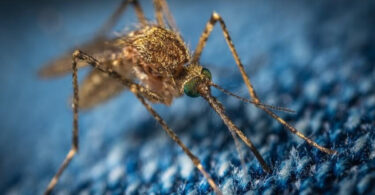
These mosquitoes are genetically engineered to kill their own children.
Researchers have reported initial signs of success from the first release into the environment of mosquitoes engineered to pass a lethal gene to their offspring, killing them before they reach adulthood.
The results, and other work elsewhere, could herald an age in which genetically modified insects will be used to help control agricultural pests and insect-borne diseases like dengue fever and malaria.
But the research is arousing concern about possible unintended effects on public health and the environment, because once genetically modified insects are released, they cannot be recalled.
Authorities in the Florida Keys, which in 2009 experienced its first cases of dengue fever in decades, hope to conduct an open-air test of the modified mosquitoes as early as December, pending approval from the Agriculture Department.
“It’s a more ecologically friendly way to control mosquitoes than spraying insecticides,” said Coleen Fitzsimmons, a spokeswoman for the Florida Keys Mosquito Control District.
The Agriculture Department, meanwhile, is looking at using genetic engineering to help control farm pests like the Mediterranean fruit fly, or medfly, and the cotton-munching pink bollworm, according to an environmental impact statement it published in 2008. Millions of genetically engineered bollworms have been released over cotton fields in Yuma County, Ariz.
Yet even supporters of the research worry it could provoke a public reaction similar to the one that has limited the acceptance of genetically modified crops. In particular, critics say that Oxitec, the British biotechnology company that developed the dengue-fighting mosquito, has rushed into field testing without sufficient review and public consultation, sometimes in countries with weak regulations.
“Even if the harms don’t materialize, this will undermine the credibility and legitimacy of the research enterprise,” said Lawrence O. Gostin, professor of international health law at Georgetown University.
Continue Reading – Genetically Engineered Mosquitoes Raises Concern